Product
RYF-001
RYF-001 / shapes maketh aim.
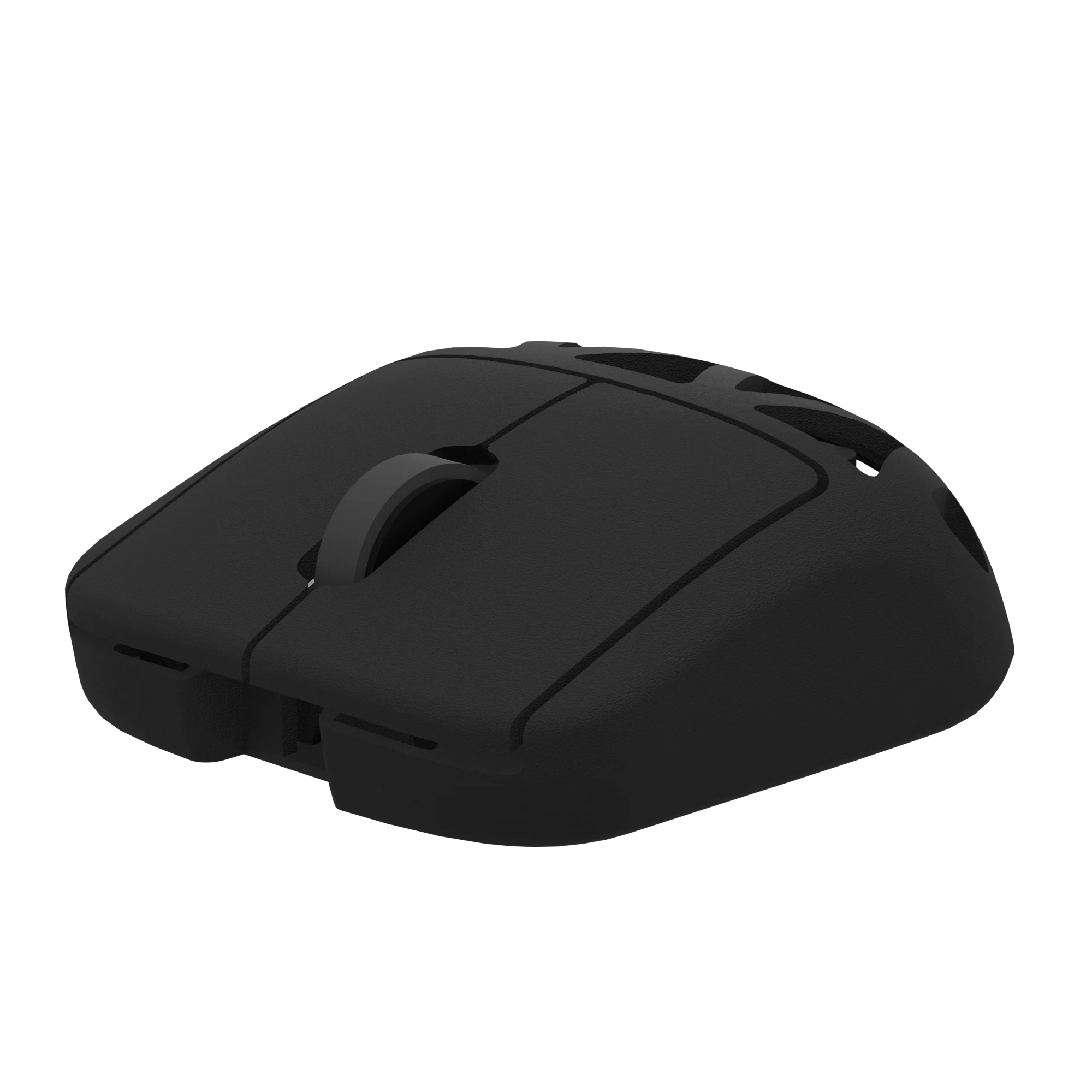
A mouse shell designed for fingertip grip only.
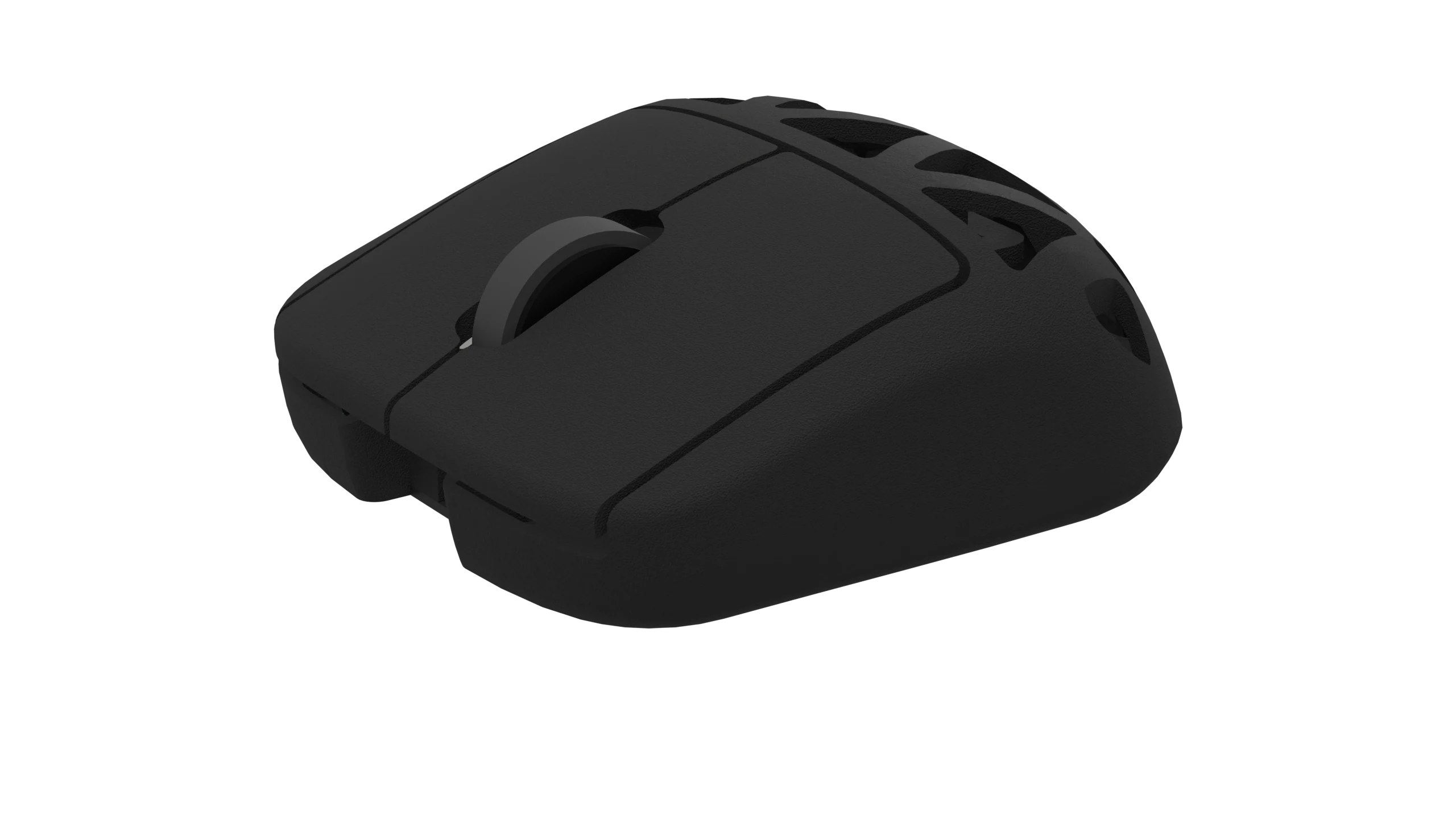
75 × 70 × 30 mm · 30 g (assembled)
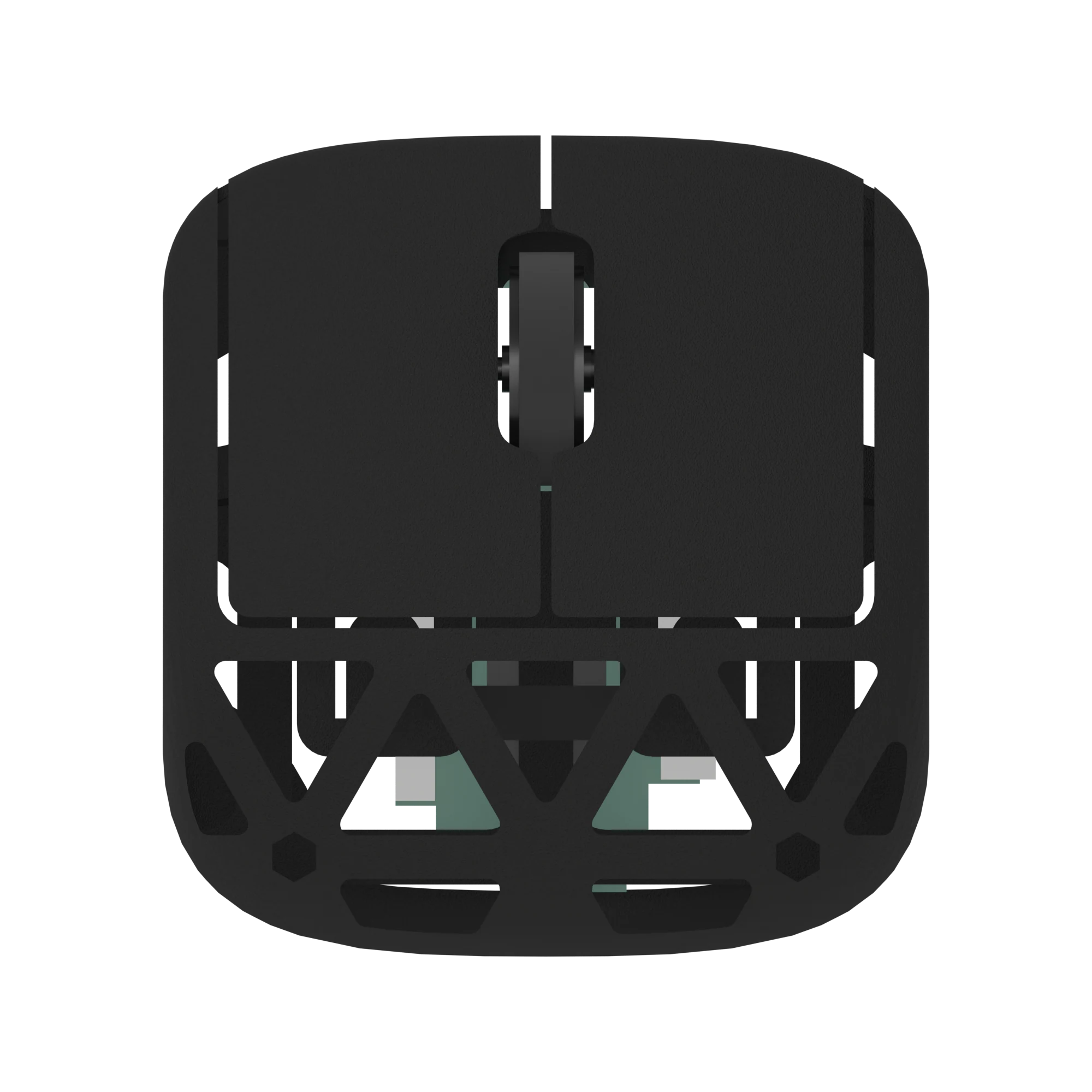
RYF-001 is made for fingertip-grip players. For those who want to take aim precision and a steady hold further while keeping the freedom of their fingertips. For those who, on a narrow mouse, notice their fingers tensing or their hold drifting. It is designed as one option in looking for that answer.
Pre-order(opens in a new tab)01 · Introduction
Shape is part of the input.
RYF-001 is a mouse shell designed for fingertip grip only. Most recent gaming mice follow a shape that was popular before. Meanwhile sensors and polling rates have converged, and the gap between high-end products has narrowed. So what decides how a mouse feels to use beyond that? One answer is the shape.
02 · Movement before grip
We design mice around movement, not grip labels.
Precise work with the fingertips always rests on something nearby — the same way the side of your palm touches the paper when you write. Bending the fingers, spreading them, flexing the wrist, sliding the palm forward and back: these are separate movements, not one. What separates one grip from another is simply which of them are fixed and which are left free.


03 · Why fingertip
The fingertip hold is the most lopsided allocation of them all: almost nothing is fixed, and the mouse is carried with everything released. That is exactly why it is the sharpest place to rethink the allocation. The cost is that building a support point falls to the fingers and forearm — which is where fatigue, gripping too hard, and an inconsistent hold come from.
04 · Wide by Design
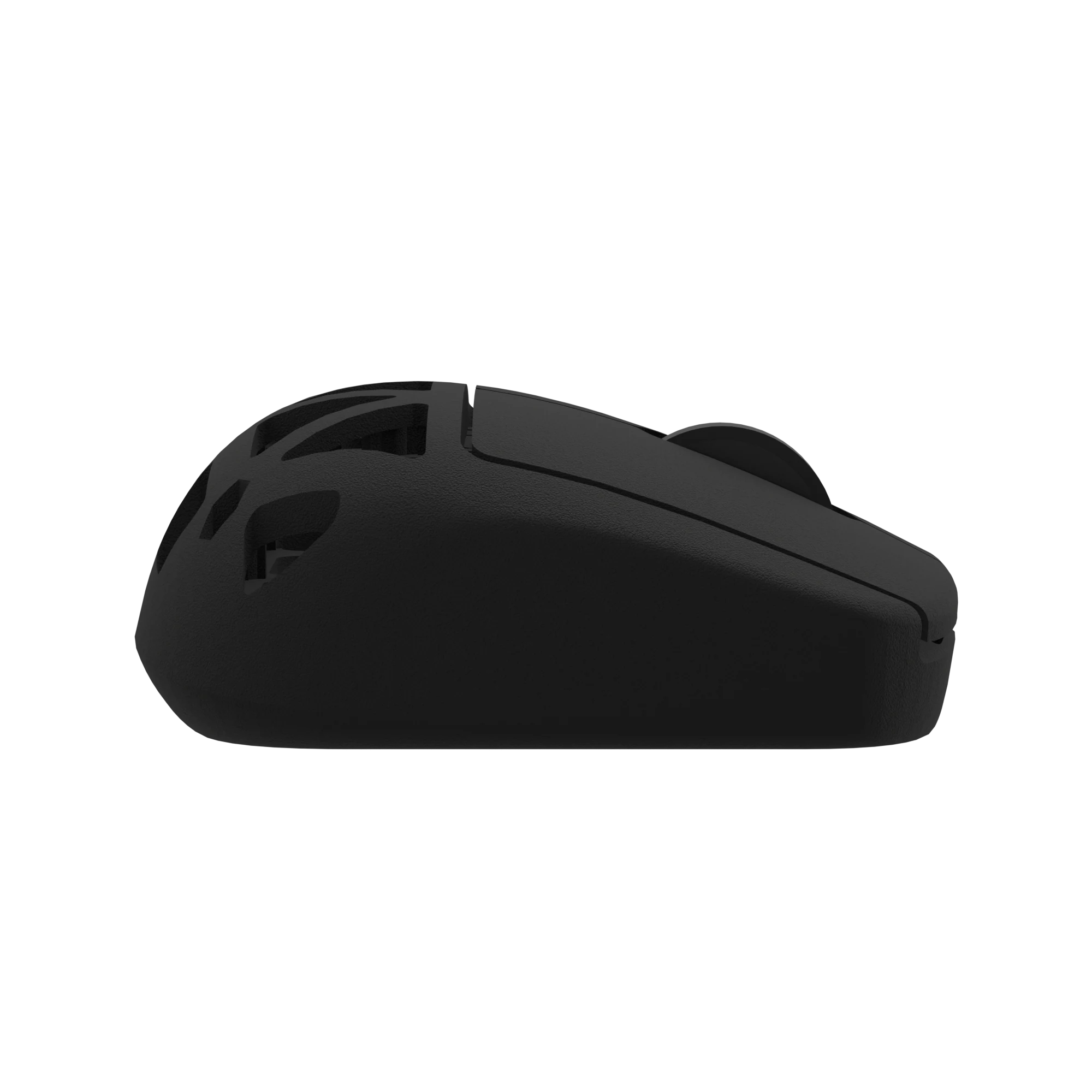
Mice aimed at a fingertip hold are usually made narrow so the fingertips can manage them. RYF-001 inverts that and is deliberately wide. The width lets the thumb, ring and little finger open outward naturally, so the mouse resists sideways movement without the fingers having to tense. The work of stopping lateral drift is carried by the shape rather than by muscle.
05 · No Waist
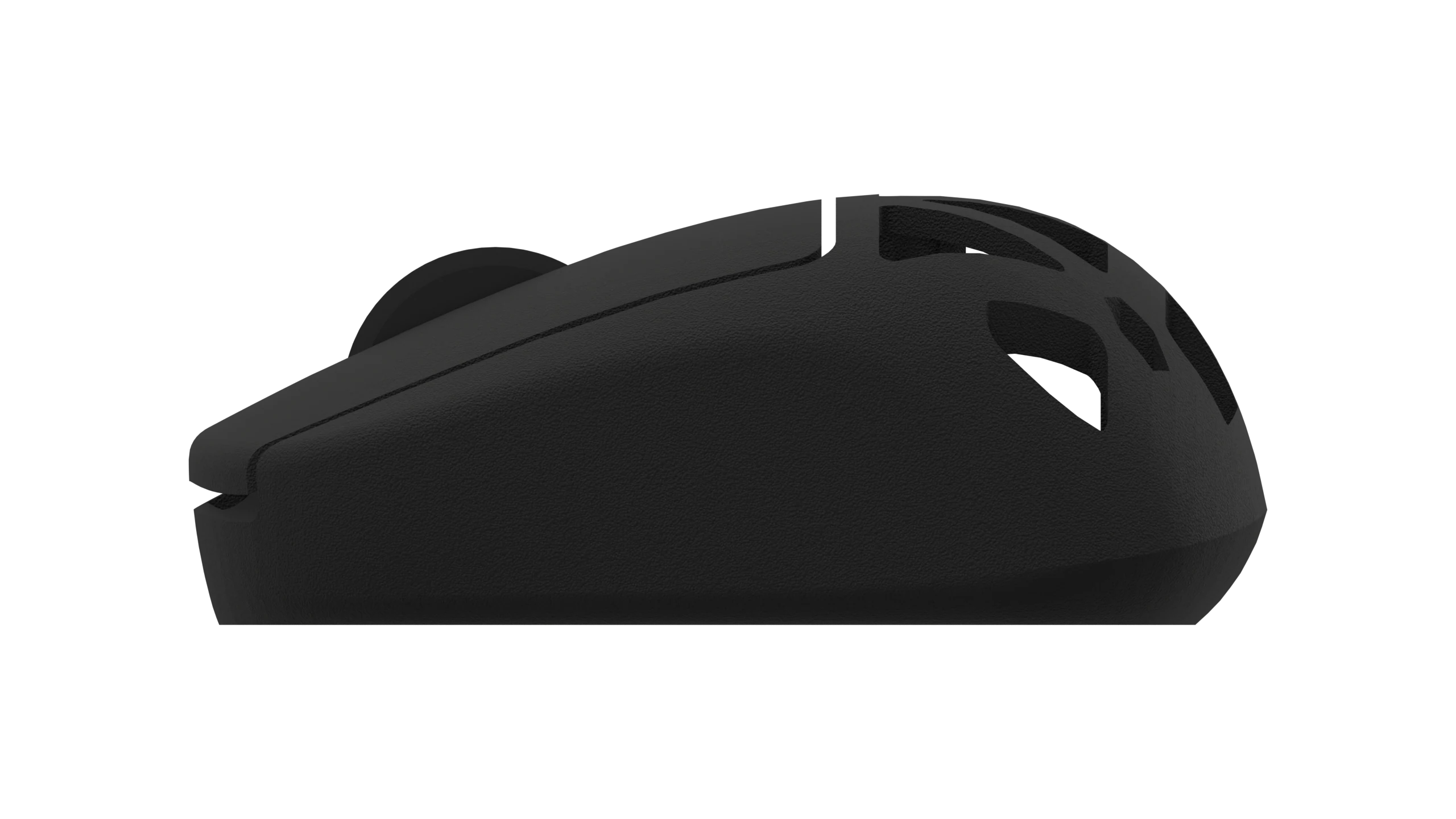
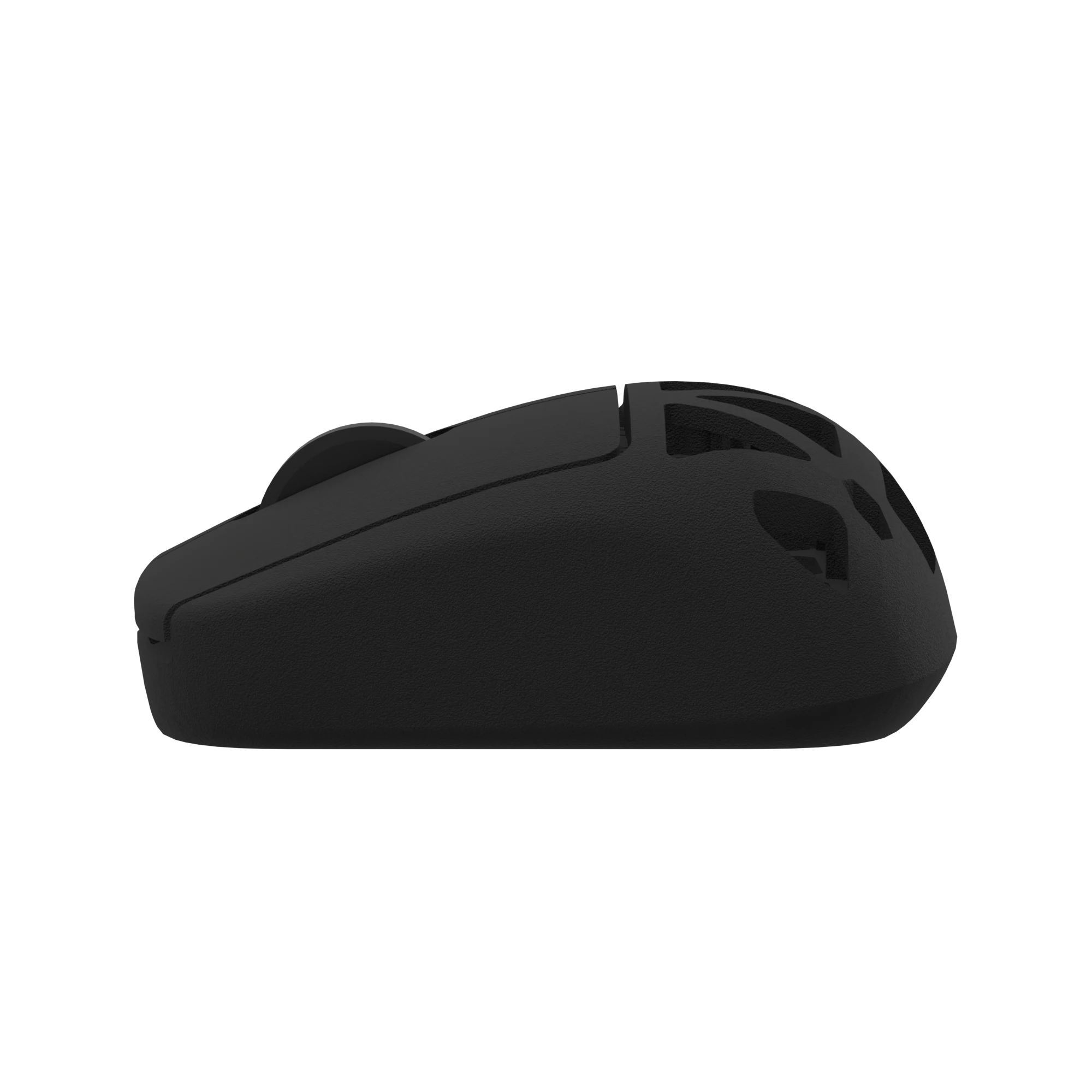
There is no waist in the flanks. Controlling sideways movement is one thing; restricting the palm from sliding forward and back would remove the freedom a fingertip hold exists for. Instead of guiding the fingers to one gripping position, the shape lets a range of fore-aft positions be held naturally.
06 · Open Finger Angle
The flanks are not steeply angled either. The width already does the work of stopping lateral drift. Dictating a flank angle on top of that would take away another freedom — whether you hold with the fingers upright or laid flat. The shape is not meant to enforce one way of holding it.
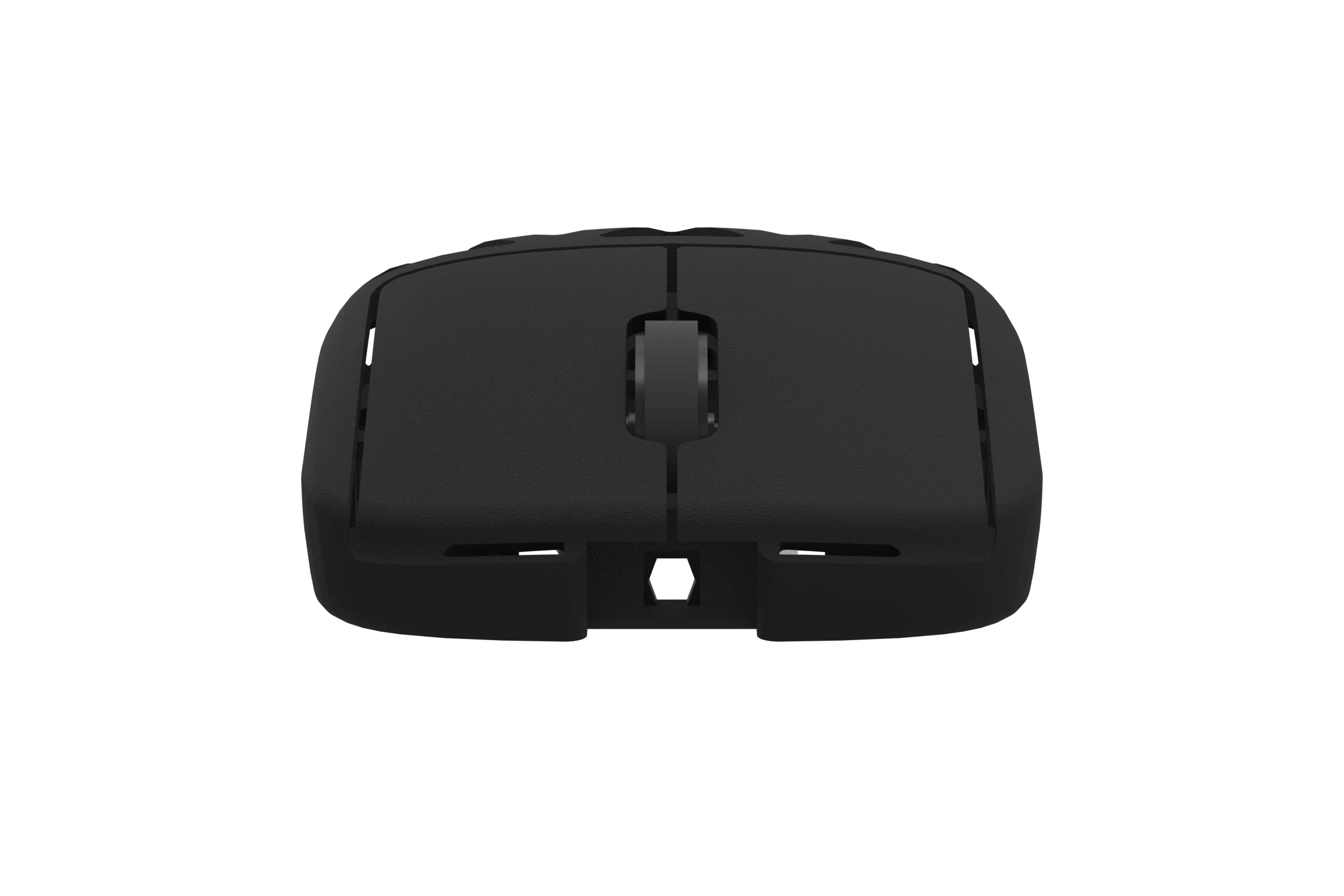
07 · Low Front
The front is as low as it could be made. What is at stake here is the vertical movement of the fingers — clicking, and small corrections. Shortening the distance between fingertip and mouse, and keeping the mouse out of the way, is meant to make hand and mouse move as one. Unlike the width, this is a place to add no resistance at all.
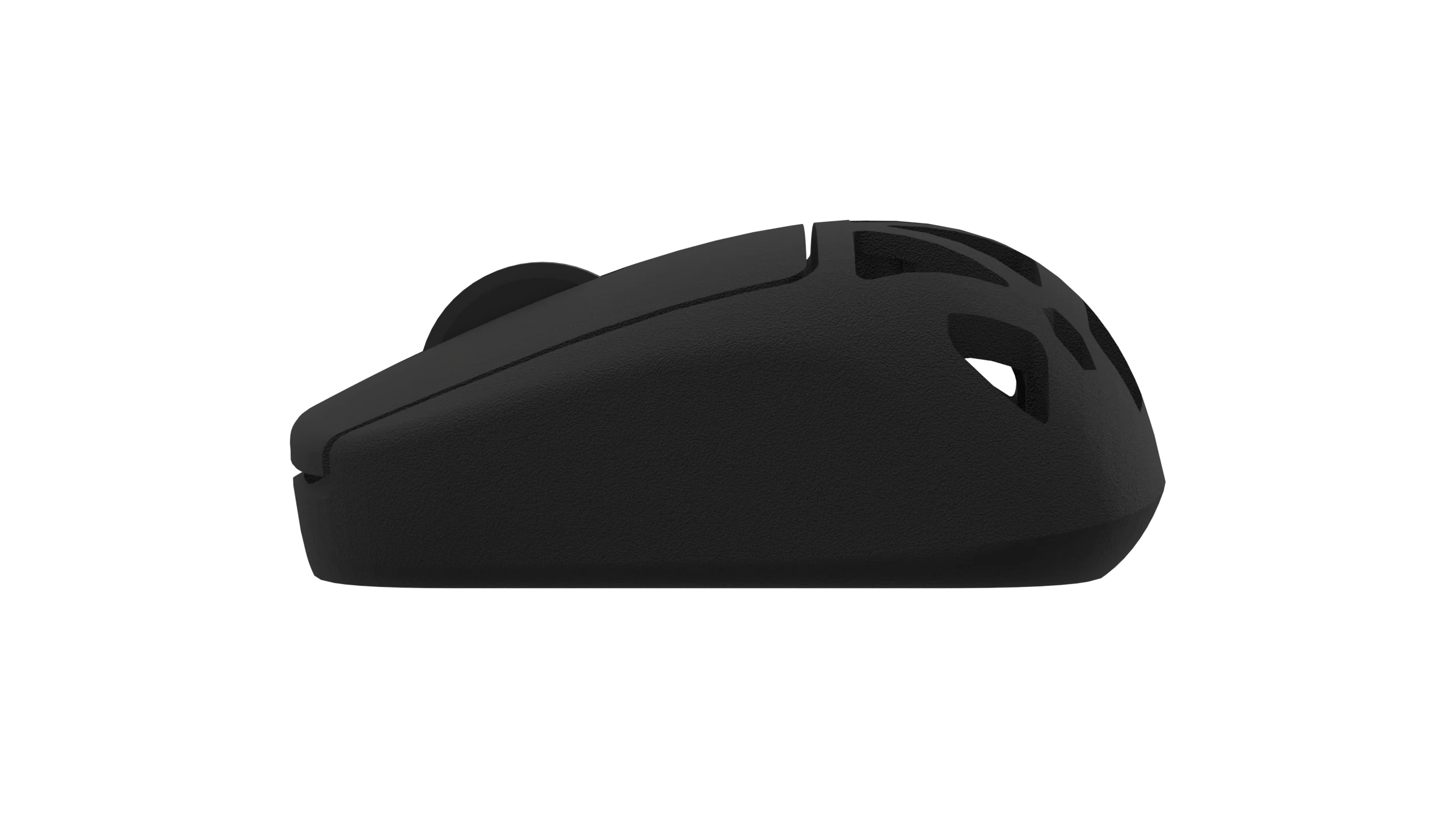
08 · Internal structure
Rigidity without added reinforcement.
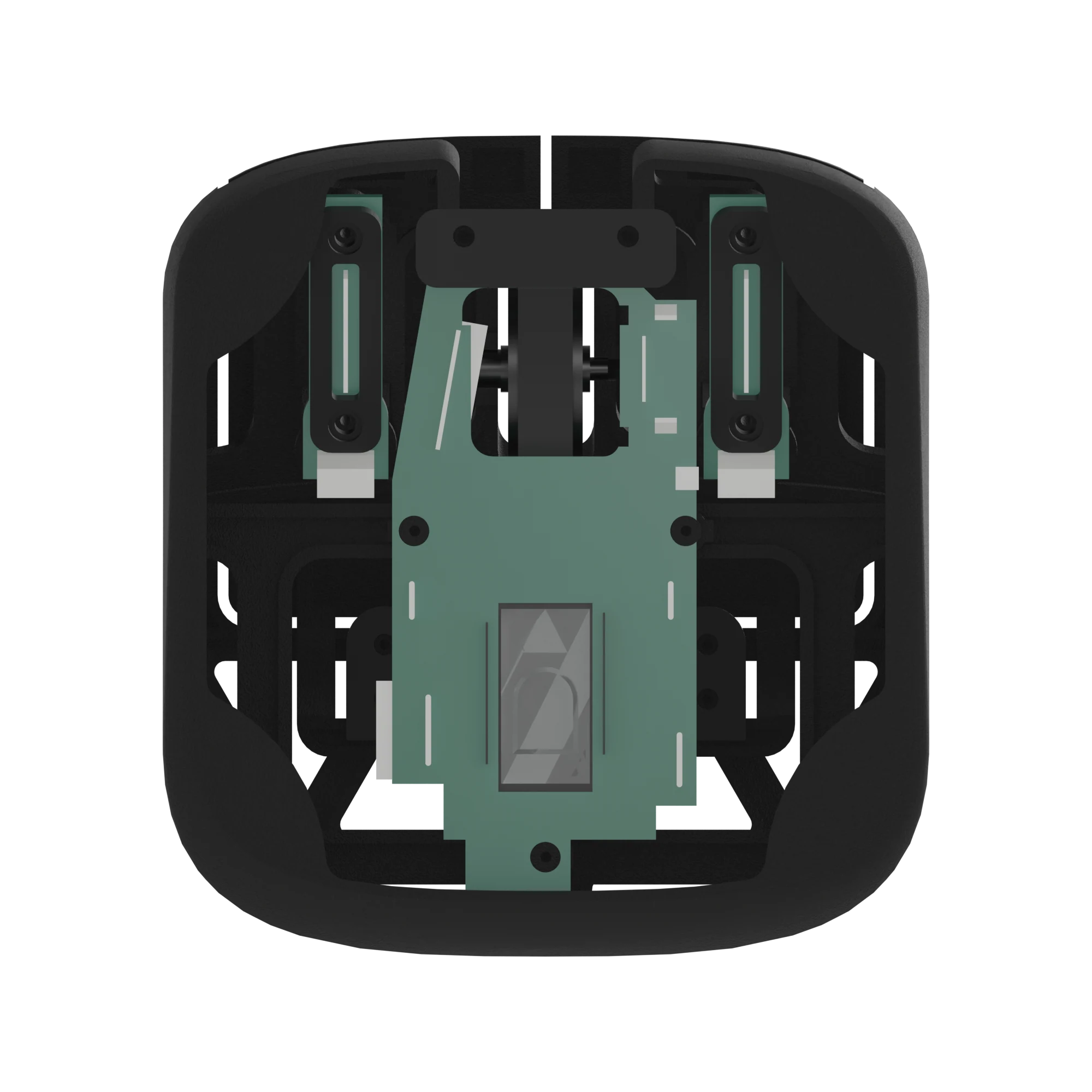
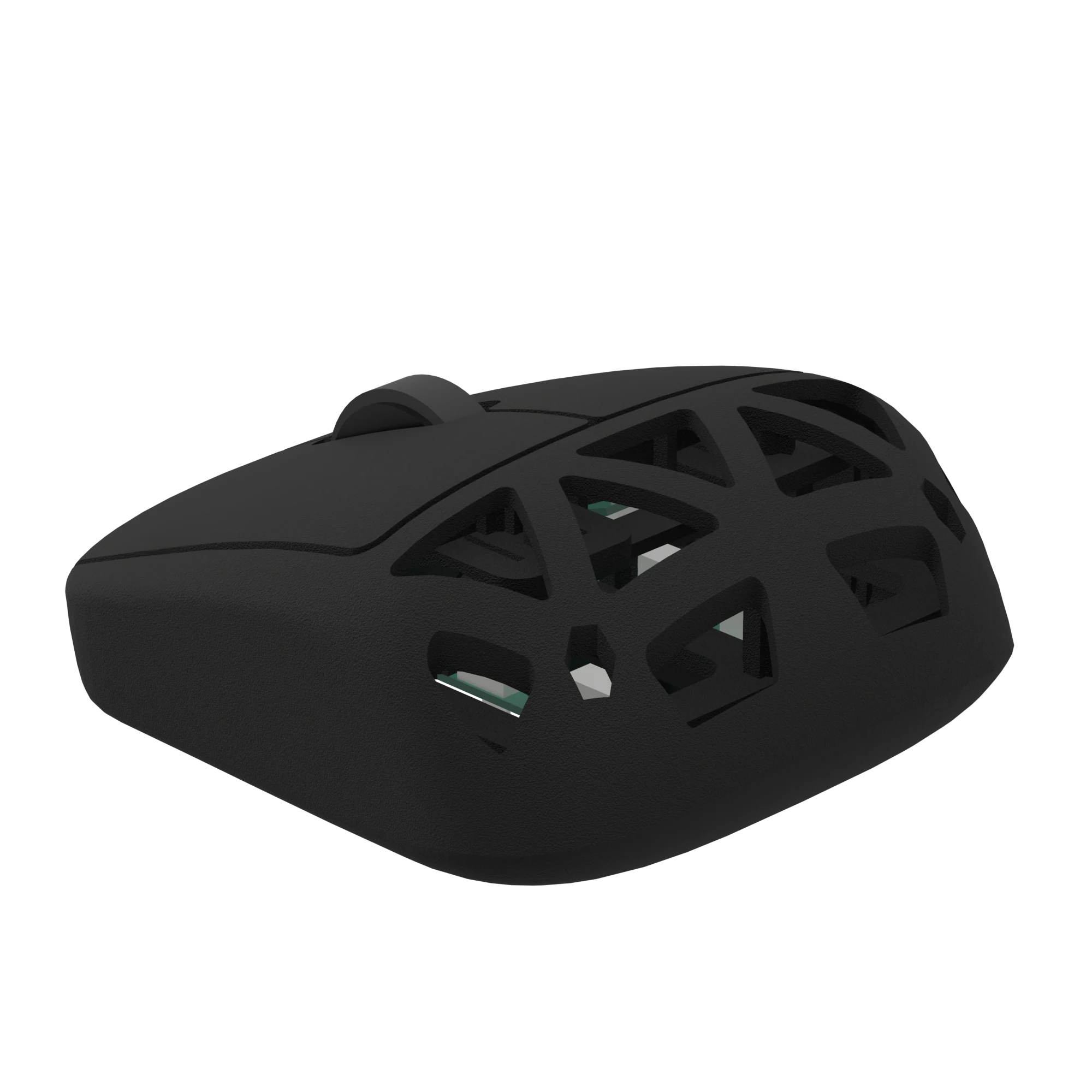
Many ultralight mice place a metal frame or a separate reinforcing part inside the shell. RYF-001 adds no such part; the housing structure itself was optimised to provide the rigidity. Material is placed where load is applied and where force travels, and left out everywhere else.
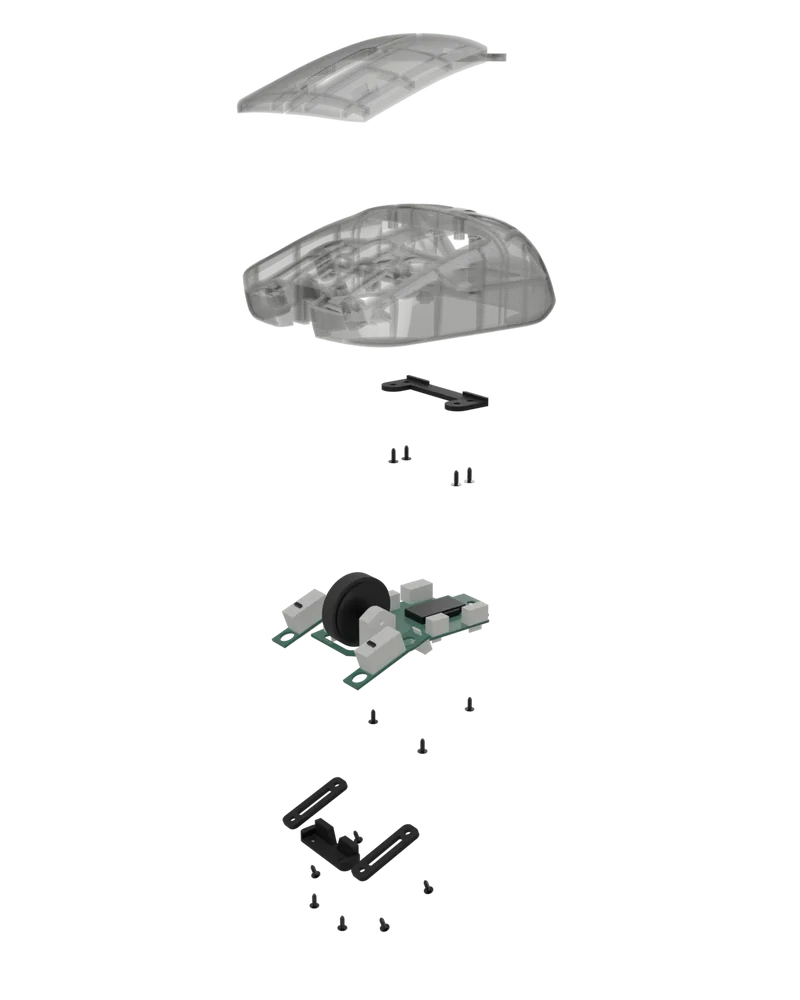
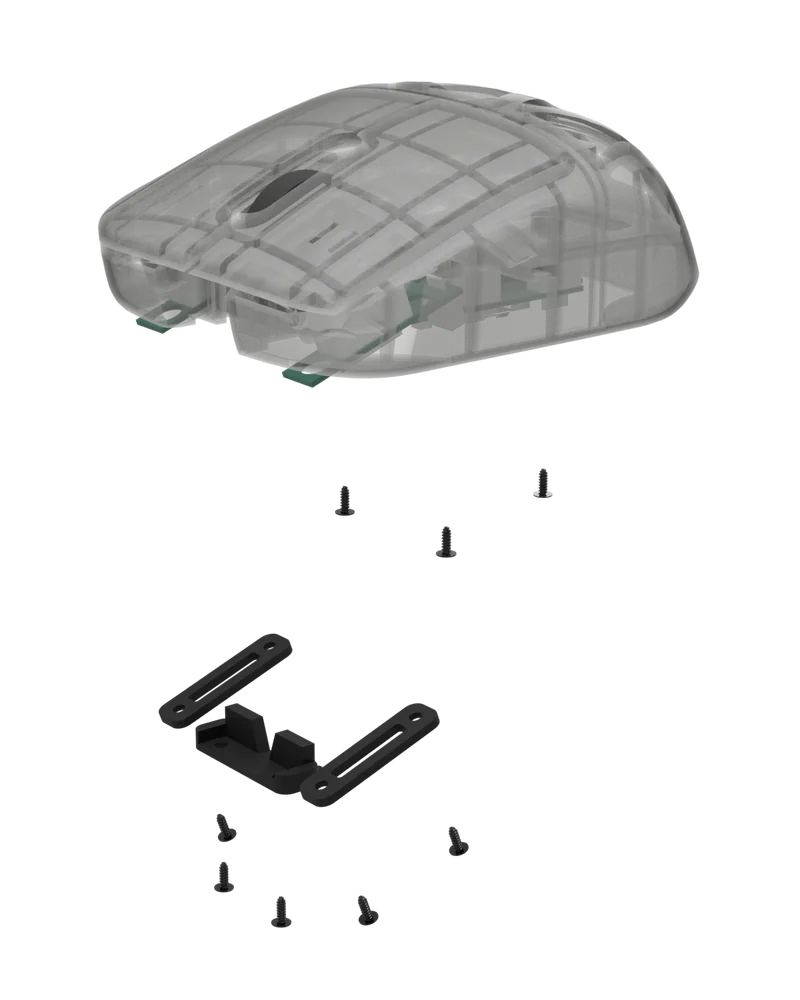
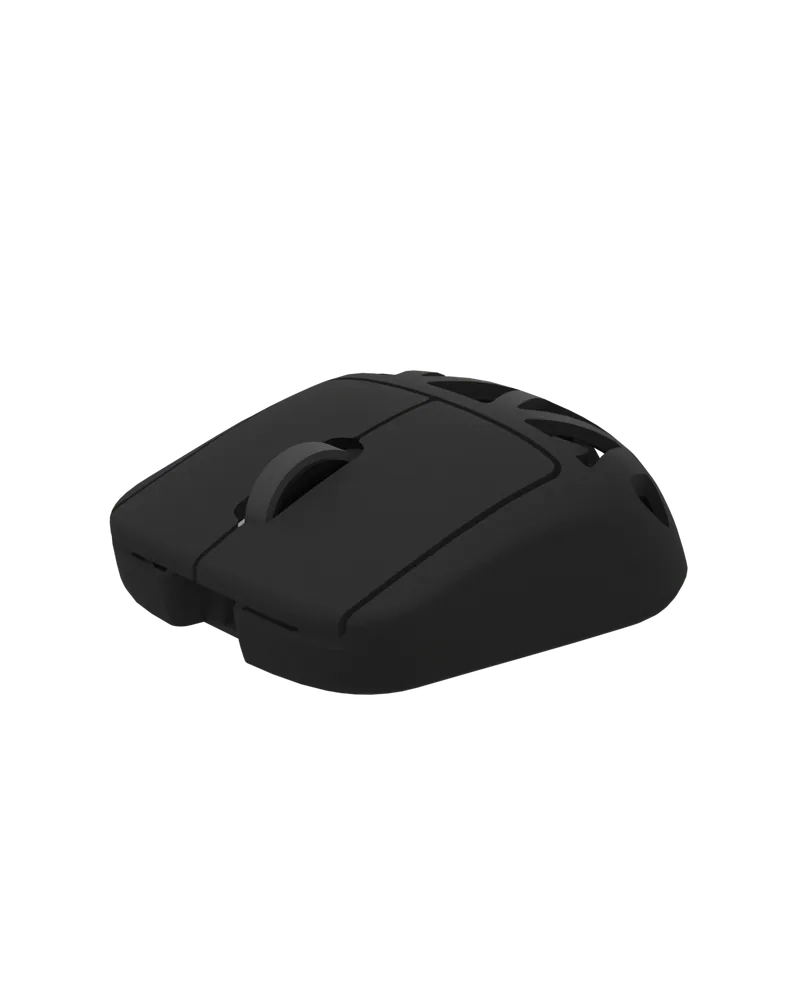
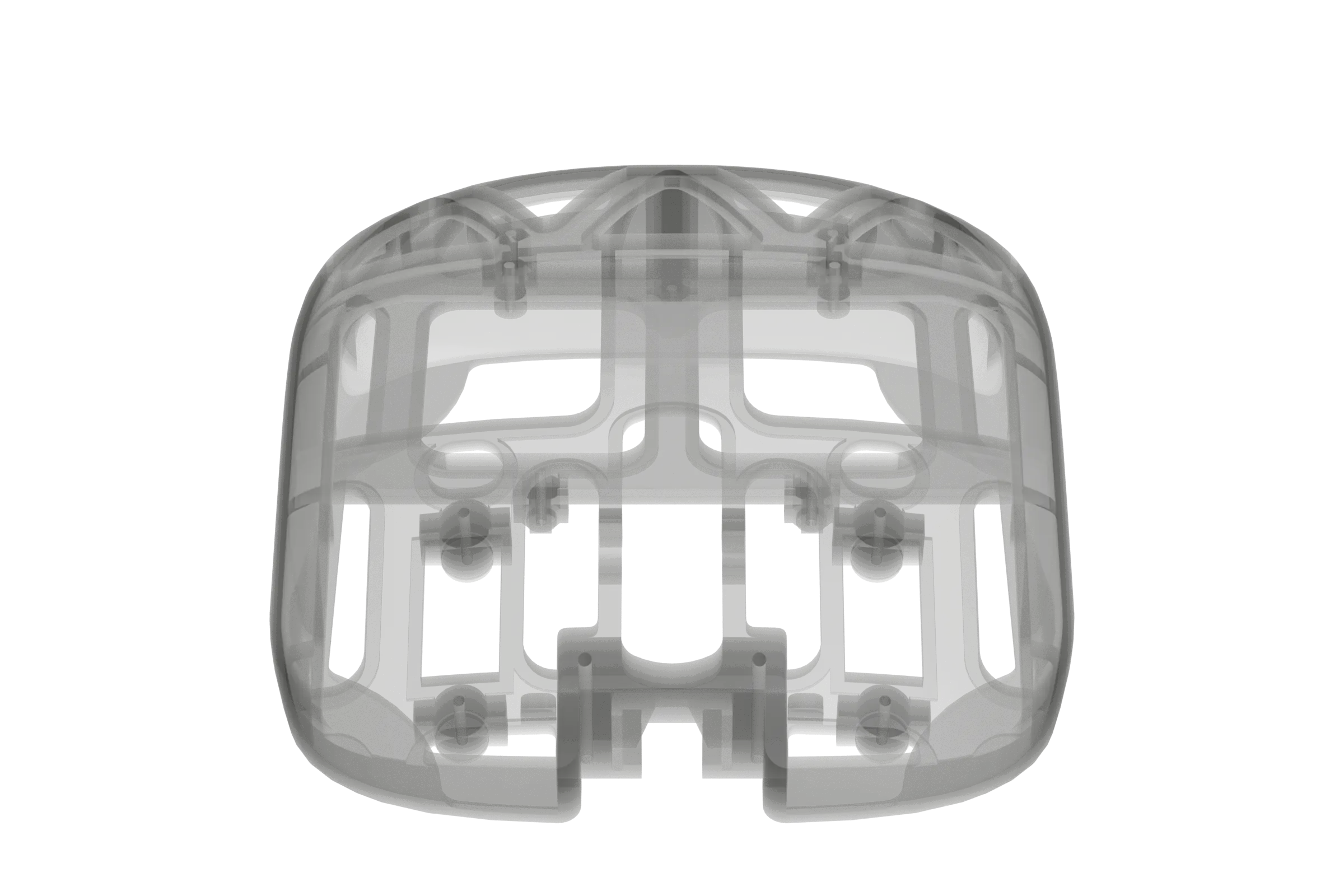
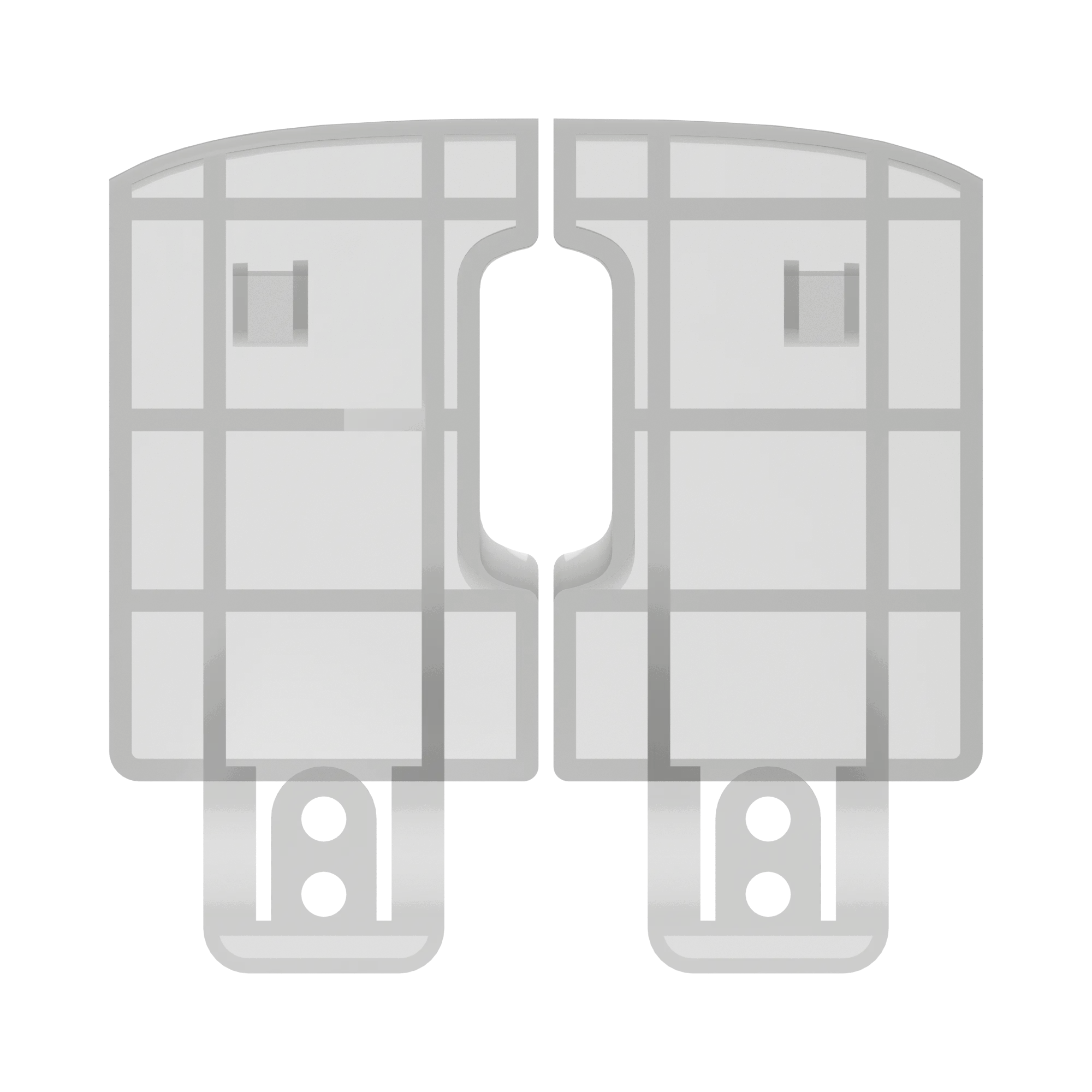
RYF-001 assembling from its parts into a see-through shell: the click plates, the rear fixing part and four screws, the board and three screws, then the remaining fixing parts and six screws
As you scroll it assembles in the order it is actually put together: the click plates, the rear fixing part and its four screws, the board and its three screws, then the remaining fixing parts and their six screws. Scroll back and it comes apart.
09 · Weight
Light is a structural result.
Thicker walls raise rigidity and add mass. Thinner walls save mass and introduce flex and creak under grip. Reducing weight here did not mean removing material — it meant putting structure exactly where it is needed and taking away the rest. It is the same method as the exterior.
11 · Gallery
10 · Dimensions
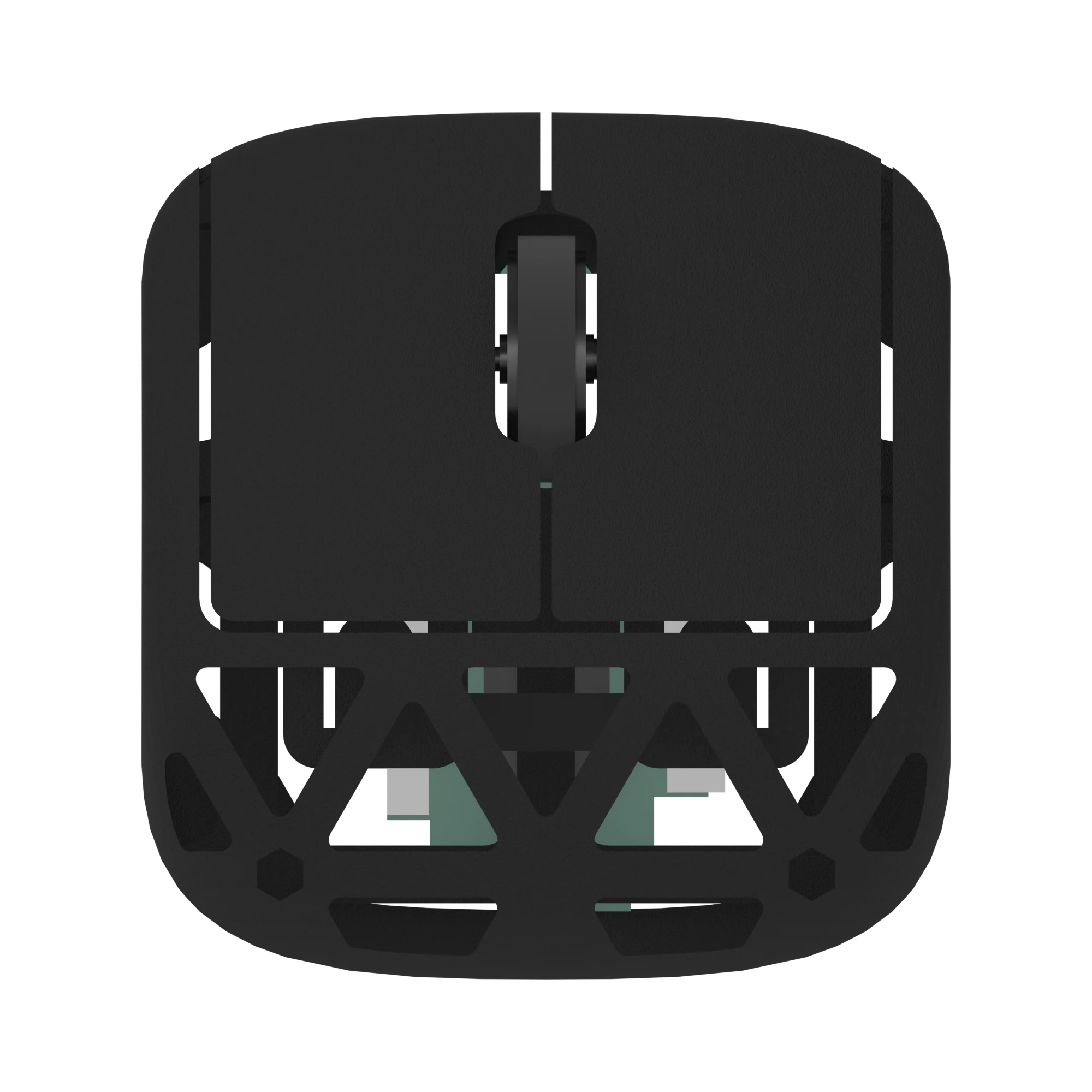
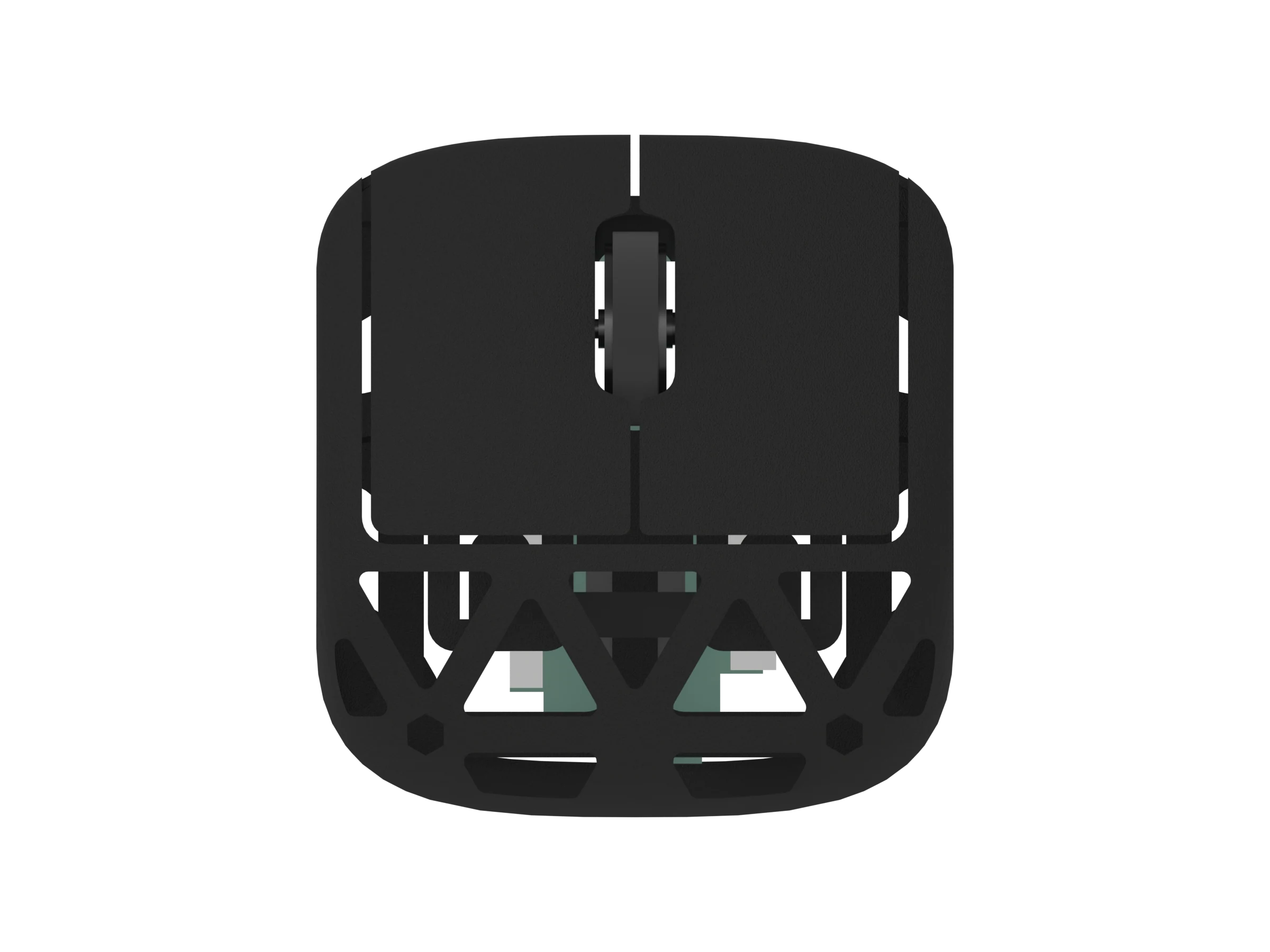
75 × 70 × 30 mm
75 by 70 mm — an almost square footprint. A conventional gaming mouse is roughly 120 by 65. The width is not a styling choice; it is the part of the design that does the stabilising work.
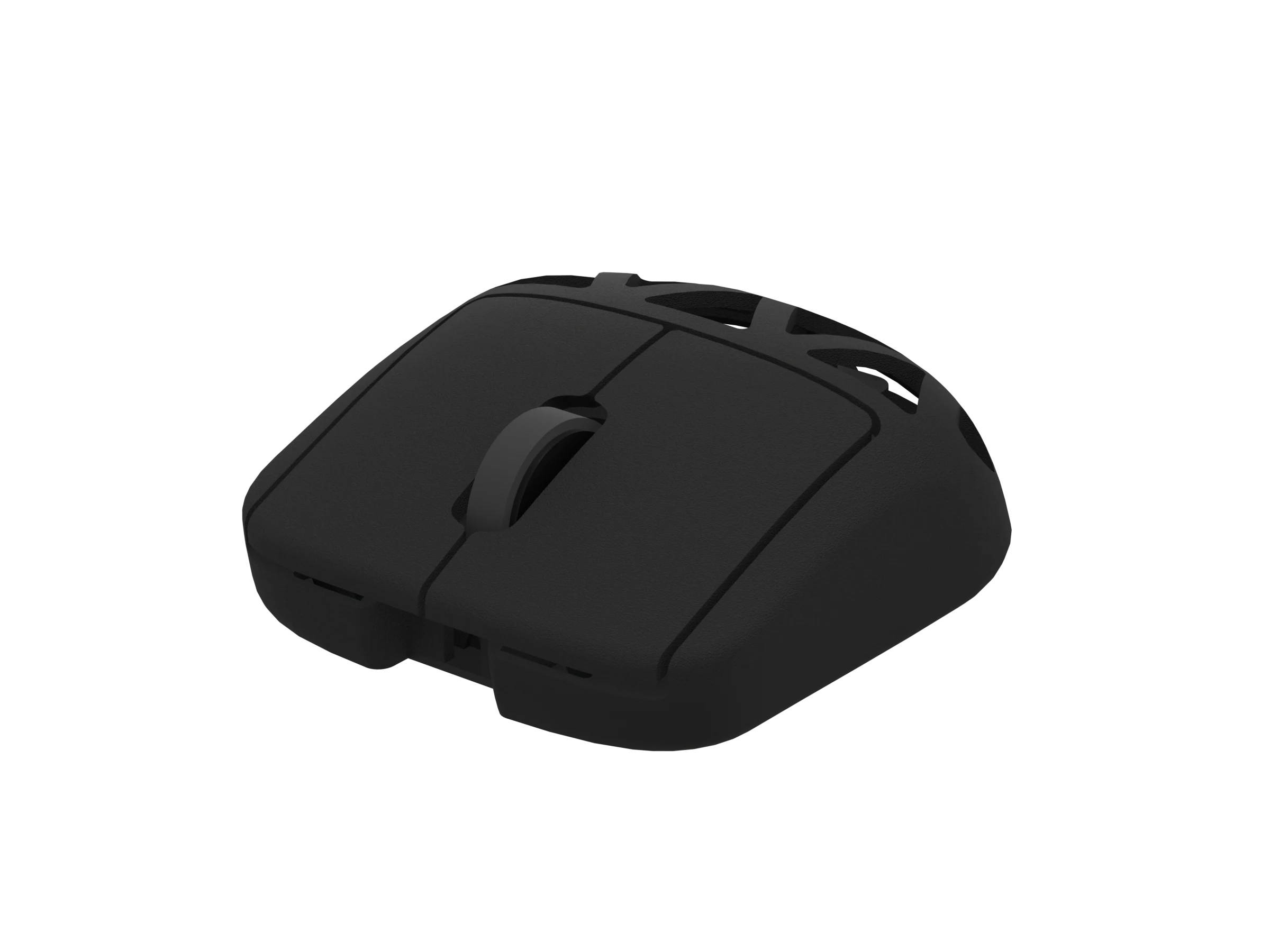
Orthographic projection from the production CAD. Mouse shell only — measured 2026-09-22.
Size, for reference
12 · Specifications
Specifications
| Length | 75mm |
|---|---|
| Width | 70mm |
| Height | 30mm |
| Weight (measured) | 30g |
| Weight configuration | Fully assembled, with the OP1 8K v2 internals fitted |
| Material | Nylon 12 (PA12) |
| Required | Endgame Gear OP1 8K v2 |
| Modification | the OP1 8K v2 taken apart and the rear of its PCB cut |
| In the box | main shell / click plates / 4 mounting parts / 13 screws |
13 · Development
The work behind the shape.
The shape does not decide the grip. The shape designs how aim moves, and the grip follows from it.
RYF-001 / shapes maketh aim.
RYF-001 is sold through Nitro Factory-devices. Ships in about a week.
Pre-order(opens in a new tab)